
Protein & Appetite
Protein Sources and Their Relationship to Afternoon Appetite
Tobias Ashcroft
·
·
10 min read

There is a moment, somewhere between noon and half-past one, when the morning's food either holds its ground or quietly concedes. For many people, that moment arrives earlier than expected — not because breakfast was insufficient in quantity, but because of what it was made of. The presence or absence of dietary fibre in a morning meal appears, in published nutritional observation, to carry an influence on how hunger develops across the working hours that follow.
Dietary fibre is not digested in the upper gastrointestinal tract in the way that protein or simple carbohydrates are. Soluble fibre — found in oats, lentils, apples, and barley — absorbs water and forms a gel-like consistency that slows the passage of food through the stomach. The practical effect of this is a more gradual rise in blood sugar after eating, and a prolongation of the fullness signal that follows a meal.
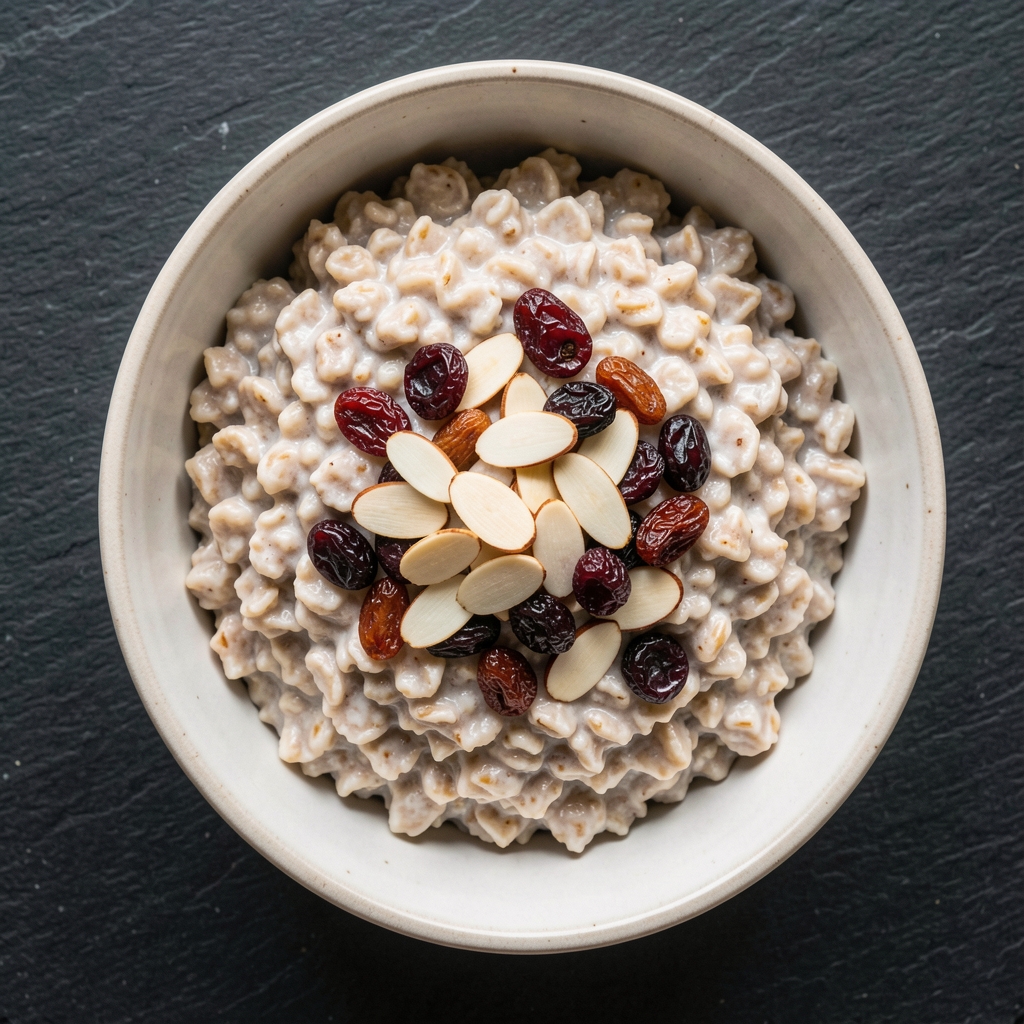
Insoluble fibre, present in the outer bran of whole grains, in leafy greens, and in the skin of many root vegetables, adds physical bulk to a meal without contributing caloric energy. This bulk engages stretch receptors in the stomach, which communicate a sense of satiety to the brain. The combination of both fibre types in a single meal — say, a bowl of porridge with flaxseed and sliced pear — tends to produce a more persistent sense of fullness than either type alone.
Published nutritional research distinguishes between the short-term and medium-term effects of fibre on appetite. Short-term, the slowing of gastric emptying is most relevant. Over a longer period — across the hours of a working day — fermentation of soluble fibre by gut bacteria produces short-chain fatty acids, which appear in the literature as compounds associated with reduced appetite signalling. This is a longer arc of satiety and food choices, operating well beyond the immediate post-meal period.
The morning food choices made between seven and nine o'clock carry a disproportionate influence on the hunger patterns of the hours that follow. This is an observation made across multiple nutritional studies, and one that food writers have noted from practical journalling as well: a breakfast of white bread with jam produces a distinctly different hunger curve than a bowl of whole oats with seeds and a poached egg.
The difference is not merely caloric. A high-fibre breakfast introduces what researchers describe as a “second-meal effect” — the observation that a fibre-rich first meal influences appetite and blood sugar response not only in the hours immediately following, but also at the subsequent meal. Legumes at breakfast, for instance, appear in dietary studies as foods associated with appetite awareness during the day that extends into the lunchtime period.
Among the food groups most consistently cited in the nutritional literature on satiety and food choices, pulses — lentils, chickpeas, black beans, split peas — occupy a prominent position. They deliver both soluble fibre and a meaningful quantity of plant protein in a single serving. The combination of these two nutrients appears, in observational studies, to extend the period before hunger returns with notable consistency.
A lentil soup eaten at midday is not merely a lunch — it is an intervention in the afternoon's hunger pattern. This is not a assured outcome for any individual; appetite is shaped by sleep, stress, hydration, and physical activity, among many other factors. But as a general pattern, the evidence supporting pulses as slow-digesting foods that contribute to appetite and eating patterns well into the afternoon is substantive and repeated across independent dietary research.
Root vegetables — particularly those with intact skins — add another layer to this picture. Boiled sweet potato, whole roasted parsnip, and steamed beetroot all deliver meaningful fibre content. When eaten alongside protein, these vegetables contribute to vegetable-rich meals and fullness that is less a spike and more a steady plateau.
“The relationship between fibre and the return of hunger is not linear — it is shaped by cooking method, the presence of other nutrients, and the pace at which a meal is eaten.”
The way a food is prepared affects how its fibre behaves. Overcooking vegetables reduces the structural integrity of their fibre, diminishing some of the physical bulk that contributes to satiety. Whole grains cooked al dente — retaining some bite — appear in food and hunger awareness literature as more satiating than the same grains cooked to a soft porridge consistency.
This is not to suggest that soft cooking is without merit. Older adults, those with specific digestive needs, or individuals who find rough textures uncomfortable may benefit from softer preparations. But for the general eating population, the texture and structure of a fibre-containing food contribute meaningfully to the experience of fullness. A slow eating pace — allowing the food to be chewed thoroughly — compounds this effect, giving natural fullness signals more time to register before the meal concludes.
Resistant starch, a form of carbohydrate that behaves like fibre in the digestive tract, is increased by cooling and reheating certain starchy foods. Cold cooked rice, cooked and cooled potatoes eaten the following day, and overnight oats all contain higher levels of resistant starch than their freshly cooked equivalents. The practical implication is that the fibre-like value of a meal is not fixed at the moment of preparation.
Observational food journalling — a method used both by nutritional researchers and by food writers recording their own eating patterns — often reveals a consistent pattern: the days on which hunger is most disruptive to concentration and mood are those with the fewest high-fibre foods. Not always the fewest calories, but the fewest slow-digesting foods.
The pattern is not dramatic in its appearance. It does not announce itself with acute hunger at 11am. More often, it is a gradual dissatisfaction — a restlessness, a preoccupation with the next meal — that begins to gather around mid-morning and sharpens as noon approaches. On days anchored by a fibre-rich morning meal, that restlessness is often delayed or diminished.
This is the arithmetic of balanced meal rhythm: not precise, not universal, but sufficiently consistent to be observed across diverse populations and documented eating patterns. The foods that keep you full are not mysterious. They are, largely, the foods that have been present on tables for centuries — oats, beans, whole rye, root vegetables — in their least-processed forms.
Published nutritional guidelines for the United Kingdom suggest an adult intake of 30 grams of dietary fibre per day, a figure that most people do not reach through everyday eating. The gap between recommendation and reality is not a function of indifference but of food availability, food culture, and habit. Ultra-processed foods — which make up a significant portion of the average British diet — are typically low in fibre and high in refined carbohydrates that produce a sharper, shorter hunger curve.
The editorial perspective of Bralven Quarterly is not prescriptive. We do not advise specific food plans or daily routines. But it is worth noting that the sustained hunger question — the question of which foods keep you full across a working day — has a fairly clear answer in the nutritional literature, and that answer does not require access to specialist ingredients. A tin of lentils, a bag of whole oats, a bunch of carrots, and a loaf of seeded rye bread represent a reasonable start.

Eleanor Whitfield writes on food, appetite, and the quieter patterns of everyday eating. She has contributed to nutritional publications and food journals in the United Kingdom since 2019, with a particular focus on the relationship between food structure and sustained fullness.
More from Eleanor →